background

KNOW MORE

E-Waste

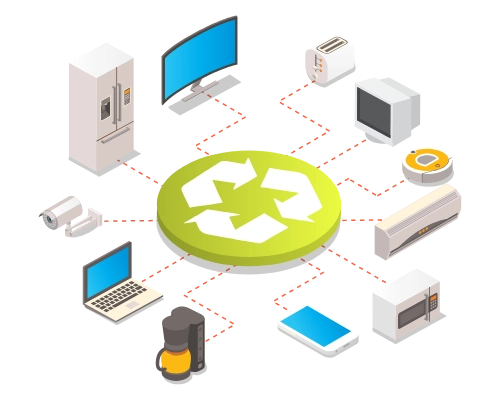
E-waste includes discarded electronic devices like phones, computers, and televisions. Improper disposal leads to pollution of land, water, and air. Recycling e-waste correctly ensures environmental protection and resource recovery, helping create a sustainable future.

  • Global:
    53.6 million metric tons generated in 2023, projected to reach 74.7 million by 2030
  • India:
    3.2 million metric tons of e-waste generated in 2023, ranking 3rd worldwide, with only 10% formally recycled.

  • L1:
    Households & Residential Societies
  • L2:
    Businesses & Corporate Sectors
  • L3:
    Bulk Collectors (Retail chains like Croma, Flipkart, Amazon, etc.)

E-waste contains hazardous materials like:
  • Lead:
    Affects the nervous system and reproductive health
  • Mercury:
    Damages kidneys and accumulates in aquatic life.
  • Cadmium:
    A known carcinogen that affects the kidneys.
  • PAHs (Polycyclic Aromatic Hydrocarbons):
    Linked to lung, skin, and bladder cancer.

  • Ensures regulatory compliance (Form 6, Green Certification, NAAC specifications).
  • Provides monetary benefits through proper e-waste disposal.
  • Supports a circular economy by promoting reuse, repair, and recycling.
  • Contributes to India’s net-zero carbon emissions goal.
  • Helps in environmental conservation and sustainability.